Category Archives: Uncategorized
Oregon (and fiction) is weird (just how it should be)
Author’s note: Humor, satire, adventure, fantasy, crime, really weird shit — all genres of fiction I feel pretty comfortable swimming around in. On the other hand, the nebulous thing known as “literary fiction” (for which I don’t believe a single person on the planet has a firm definition … it’s a know-it-when-you-see-it kind of thing or a label earned if the writing/writer seem intelligent enough) is entirely alien to me. In my humble opinion, fiction intended to be literary feels unforgivably put on and obnoxiously pretentious. However, fiction that you know is “literary” when you read it tends to be very enjoyable. So I hesitate to say the manuscript from which the following passage was pinched is from my first crack at “literary fiction,” but I was trying to write a novel-length work that played in the worlds of theme and imagery and metaphor more than I’ve done before. The problem I’m having is that making writing more intelligent is REALLY DIFFICULT (It’s like you need to be smart to do it, or something)! Maybe I’ve discovered why so many works marketed as “literary fiction” feel like they’re trying too hard. Below, I’m sharing one scene from this particular manuscript that I feel good doesn’t try to be literary fiction at all, and yet in the grander scheme of the book does a lot of work advancing themes and character development (hopefully without the reader ever knowing because the last thing I ever want a reader thinking is, “Hey, nice character development bro!.”) As always, thanks for reading — Jay
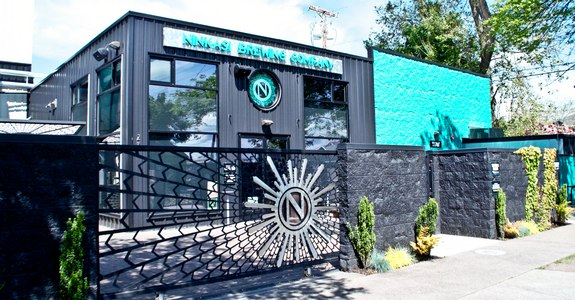
The folks in the capital of Texas like to say “Keep Austin Weird,” but they might blanche if they knew just how weird weird could get. The people of Eugene know the limitlessness of the thing. Eugenites embrace it with a colorful flourish.
It’s not that embracing weirdness and diversity is unique to Eugene. It’s a flavor of the Pacific Northwest as distinctive to the whole region as the hoppy bitterness of their pale ales. Similar cultures thrive in Portland, Seattle, and a good many of the seaside towns that dot the coast as far down as Humboldt Bay in California. They generally have many things in common. Passionate love of the environment, nature, trees you hug, trees you smoke. But the color of it is a slightly different tint of weird in each town.
Art and Amelia prided themselves on being open-minded. But amid the amazing dance of weirdness moving around them as they strolled down the street to Ninkasi Brewing Company’s downtown tasting room, they couldn’t help but judge. Dressed in their yuppie hiking duds, Eugene judged them right back.
Sitting outside having a pint together were two women: a neonblue-haired goth punk tattooed from neck to toe, dressed all in black and beetlejuice leggings, and a naturally bluegrey-haired hippie all in flannels and hemp. Like twins, their heads turned in tandem to take in Art and Amelia walking up the street. They turned back toward each other and passed mischievous grins. In unison, the goth and the hippie fought to stifle harmonic snorts of derision in their pints. Then they noticed Apple. They faced each other again, took mirroring sips of beer, and agreed that they must be OK if they owned a pitty without ever saying a word. Symbiotic weirdness telepathy. It’s science. They continued to eye the newcomers as they meandered onto the tasting room’s patio and sidled up to the outdoor tap bar.
“What do you have?” Art asked. “We’re just visiting, but we heard Ninkasi is great.”
She stared at Art a moment. Choked down a sigh. Then she recited the beer list in the exact order they were written in large pink and white chalk letters on a chalkboard over her shoulder. “Total Domination IPA, Tricerahops Double IPA, Quantum Pale Ale, Spring Reign American Pale Ale, Maiden The Shade IPA.”
“Folks really like their pale ales up here. Do you have anything that’s not super hoppy? My wife’s not a big fan of hoppy beers.”
“I’ll have the Tricerahops, please,” Amelia said.
“OK, never mind. My wife will have the Tricerahops. In that case, I’m not a big fan of hoppy beers.”
“Oatis.”
“What’s that?”
“Oatmeal stout.”
“Sure. Sounds great.”
“Vanilla?”
“What?”
“Vanilla Oatis or regular Oatis?”
Art asked her what the difference was, but the bartender had stopped paying attention. Her pale cheeks were suddenly flush and her eyes were sparkling as she asked a guy with a matching stocking cap and cascading dreadlocks if the dog was his. Apple was winning over more locals. She’d be ready to run for political office before the day was done. In a town like Eugene, she might could win.
When their beers were finally in hand, Art and Amelia slid in at a communal high top table next to the synthetic blue-hair goth punk and naturally bluegrey-hair hippie.
“Did you know we just met today at a coffee shop? We’re both lesbians and we both play the ukulele. You’re not a lesbian, are you?” the hippie said to Art as he sat down next to her.
Art stammered for a reply. “I’m a guy. I can’t be a lesbian.”
“Oh honey, you can be anything you want to be. We don’t believe in assigning gender classifications here,” the woman said. Her voice was cheerful.
“I, um, no then, unfortunately, I am not a lesbian. I appreciate and respect vaginas, though. I mean my wife’s vagina. I mean all vaginas, but I’m exclusive to my wife’s.”
“Oh God, you’re an idiot,” Amelia said.
The older woman laughed. “I’m just taking the piss out of you, young fella. Nothing’s more entertaining for an old dyke than a young straight guy. See what I mean, Jean?” Jean was the blue-haired goth.
“I guess you could consider it charming. But they’re so awkward about everything. That’s what turned me off about men. The awkwardness, not penises. Dicks are ok,” Jean said.
“I’m still sitting right here, you know.”
“Are we making you uncomfortable, honey? I’m sorry. Eugene restaurants don’t have special seating sections for discriminators.”
Amelia sat back and enjoyed the show as Art drowned himself in shallow water.
“I didn’t mean it like that.”
“Oh my, relax, honey. You’re too easy. I’m Betty and this beautiful angel is Jean. Like I said, we just met today, but we share the same twisted sense of humor. You’re just going to have to deal with it until you can down that sissy beer of yours. What is that, Oatis?”
“Vanilla Oatis.”
“May gays forgive me for calling you a sissy. I’ve insulted us all. So what brings you to Eugene, Mr. Man? You’re not from around here.”
“We’re on a road trip for a few weeks. I guess we’re going for sort of a reset in life, trying to focus on what’s important.”
“And what have you found out?”
“About what?”
“What’s important in life.”
“I’m not sure yet.”
Amelia reached out to touch Art’s hand. “We’re figuring things out as we go. It’s just hard to put in words.”
“Well,” Betty said. “Eugene is a good place to learn about what’s important in life. It’ll teach you a few things. Love Mother Nature, first. Materialism is a disease, second. Just look around. People are poor here, but we’re happy. We’ve got old shit cars and we live in old shit houses, but we take care of each other. We’ve got enough thrift stores to clothe us all. The cost of living is so low we can still afford an overpriced beer at Ninkasi. And all the entertainment is free. Just go for a hike in the woods. Nothing could be better.”
“What about you?” Art asked Jean. “What do you like to do?”
“Are you talking to me, uterus defiler?”
Art was stunned into silence. Jean burst out laughing.
“Oh my God, Betty, that is fun. Holy shit, dude, lighten up. I hike, too. You don’t think I like to hike because of how I look. I get it. You’re from someplace on the East Coast, right?”
“New Jersey. Near Princeton.”
“Exactly. It doesn’t matter what anybody looks like out here. We’re here to live the lifestyle. I spend a little more time fucking and Betty spends a little more time hiking, but I think we like them the same. The only people who don’t live the lifestyle are some of the yuppie sellouts. You’re not a sellout, are you?”
“I’m unemployed. We all are, even the dog.”
“Good for you,” Jean said. “Yuppie jobs are shackles. They weigh you down. It happened to my parents. Hey, are you going to drink that Tricerahops?”
Amelia shook her head no. It didn’t look like the beer had been touched. Art questioned her with a raised eyebrow. She shrugged her shoulders and his face transformed into patronizing ‘I-told-you-so’ mode.
“It’s all yours, Jean. My wife does not come with the beer.”
“What?”
Art stammered again, unable to crack the code of acceptable lesbian humor.
“You know what, Art, I’m actually pretty hungry,” Amelia said. “Why don’t we head out for dinner?”
Art wasn’t quite sure what the urgency was all about. They had virtually just gotten there, but the tone in her voice made his heart skip two beats and then squeeze through a painful murmur to get back on track. He made his apologies to Betty and Jean and was surprised by the warmth of their farewell.
Betty smothered Art with a musty hug when he stood up, her ancient flannel transmitting its peculiar scent of natural body odor and fresh herbs onto his shirt. In the town of Eugene, a shared beer and a little understanding is all it takes to earn a new friend.
Mythological Monster Madness: Breaking Down the Field
I wrote this little ditty last March in a shameless attempt to use March Madness to get published on McSweeney’s Internet Tendency and because, well, because I was in grad school and had nothing better to do. Ah, halcyon days. Since McSweeney’s didn’t want it, you get to read it on my blog every March from now until eternity! Enjoy this oldie but goldie!
The Mythological Monster Madness bracket is set, but not all competitors are created equal. We break down the field to separate the real contenders from the pretenders in this year’s edition of the greatest sporting competition in the mythological history of the world.
Asia Pacific Region

No. 1 China: Chinese Dragon
No. 4 Nepal: Yeti
Expect the imperial Chinese Dragon to wear down Nepal’s Yeti with waves of cultural hegemony and feigned friendly diplomatic overtures, setting up its famed “Maoist backdoor cut” all day long. China has to be seen as favorites to win the whole tournament as its greatest symbol of power is backed up by the deepest bench in the field, 1 billion-plus Chinese laborers.
No. 2 Japan: Pikachu
No. 3 Australia: Drop Bear
If Japan can get past Australia’s Drop Bear, it could be a tricky match up for the Chinese Dragon thanks to Pikachu’s electric conductivity making it highly flame retardant. That will be no easy feat, though, as Drop Bear – a giant, flesh eating koala – will look to down Pikachu like so much eucalyptus. The Selection Committee dealt a crucial blow to Japan’s hopes when it denied Pikachu’s appeal to evolve into Raichu, stating that Raichu did not appear on Japan’s official roster.
British Isles Region

No. 1 Scotland: Unicorn
No. 4 England: Pixie
England once again brings a big reputation and little substance to the tournament as the Pixie relies exclusively on its strategy of leading opponents to the woods and leaving them there lost, which should pose no problems for Scotland’s Unicorn – a native of woodland habitats. The Unicorn is the only competitor that is not only its nation’s most prized mythological creature but also the actual national animal. Bald Eagle doesn’t seem so great anymore, does it? The only thing standing between Scotland and a title run is the Unicorn’s blood – instant immortality will make any opponent that drinks it a real challenge. A potential Final Four match up with Vladimir Putin could spell international disaster should the Russian Dictator, er, President get hold of the Unicorn’s horn.
No. 2 Wales: Welsh Dragon
No. 3 Ireland: Leprechaun
Lacking the wisdom and strategery of the Chinese Dragon and relying more on brute force, the Welsh Dragon boasts perhaps the best offense in the field. However, Ireland’s Leprechaun will look to exploit the Welsh Dragon’s uncontrollable gold lust with its own damnably-frustrating-to-steal pot o’ the shiny stuff. Should Ireland advance, it would surely fall to Scotland. The Unicorn’s ability to completely disorient the Leprechaun by farting a maze of rainbows would nullify its famous shiftiness.
Europe Region

No. 1 Russia: Vladimir Putin
No. 4 Austria: Krampus
What, we ask, is more mythological than Vladimir Putin? This legend has hugged polar bears, rode horseback shirtless through the Siberian wilderness, shot whales with a crossbow, saved a TV crew from an escaped tiger, flown on a hang glider with migratory cranes and distracted the world from his impending invasion of Ukraine with a little event symbolizing world peace known as the Olympics. After an excellent season of terrorizing Alpine children, Austria’s lovable horned pseudo-Pagan-Christian Christmas demon Krampus stands little chance against the world’s greatest living myth left after the passing of North Korea’s Kim Jong-Il.
No. 2 Greece: Minotaur
No. 3 Germany: Wolpertinger
What better creature to survive the labyrinth of the world’s most competitive conference tournament than the Minotaur? Besting such rivals as Cyclops, the Titans, Hydra and Cerberus to make it this far, the “Cretan Beacon” is a strong hope for perennial power Greece. However, the brutal Greek Conference left the Minotaur bloodied and vulnerable after Theseus beheaded it in the waning moments of the league championship game. Having no head with which to see should play right into the paws of Germany’s Wolpertinger, the deer antlered, bird winged rabbit-wolf creature whose main skill involves hiding from drunken Bavarian hunters.
Americas Region

No. 1 Argentina: Diego Maradona
No. 4 Guatemala: El Sombreron
The former child street urchin and cocaine addict is worshiped as a god by many in his soccer loving nation. The people call him Golden Boy and Hand of God, but his most famous nickname came from a radio commentator who wondered aloud on air after a Maradona goal, “Cosmic Kite, what planet have you come from?” The egomaniacal mighty mite’s greatest power is perhaps his unflinching hyperinflated belief in his own legend. Underdog El Sombreron from Guatemala is the feel good story of the tournament, a silver guitar-playing bogeyman in a big sombrero who stalks women by ceaselessly serenading them, trying to braid their hair, and putting dirt in their food so they’re always hungry and can’t sleep. Unfortunately, those skills mirror Maradona’s, and El Sombreron doesn’t kick a soccer ball nearly so well.
No. 2 Egypt: Mummy
No. 3 USA: Chupacabra
America’s best hope was squashed when the Selection Committee ruled that Chuck Norris was not eligible for mythological competition because all acts of greatness ascribed to him were, indeed, 100% factual. That opened the door for the upstart goat-eating Chupacabra out of Puerto Rico, the first tourney contestant to carry the flag for an imperial overlord. Egypt back-doored its way into the tournament by virtue of an American archaeologist’s early 20th century theft of a cursed mummy. The Committee ruled that the Mummy’s 100-year residence in the basement of a small New York college library qualified it to compete on behalf of its original nation in its new home region. The Mummy is coached by the legendary Anubis, Egyptian god of the dead, and may be able to upset Maradona in the second round by convincing him of the benefits of embalmment.
Biggest tourney snubs

1. Norwegian Troll
The struggles in recent years of Norway’s legendary Troll have led to a drastic drop in fuzzy-headed troll keychain sales as its stock falls faster than Duck Dynasty ratings, leading some to label it the Kentucky Wildcats UCLA Bruins1 of mythological sport.
2. Polite Frenchman
Perhaps the strongest mythological entity to be left out of the field in centuries. The Polite Frenchman is so rare that it is rumored the Committee extended him a bid, but he was never located to accept it.
3. Africa
Africa’s mythological sport leagues continue to languish under the Eurocentric Selection Committee bylaws excluding these nations from competing on the grandest stage. A history of racism and bias against oral folklore once again casts a shadow over this great tournament, and we expect more African nations will follow Egypt’s lead finding alternative routes into the field through gross cultural appropriation by Europe and the United States. To wit, former NBA star, Old Spice pitch man and Dikembe Mutumbo Saves the World hero Dikembe Mutumbo is rumored to be in training to compete on behalf of the Democratic Republic of Congo next season.
1 Boy, how times change fast. When I wrote this in March 2014, Kentucky was coming off a first round NIT exit and slipped into the 2014 NCAA Tournament as an 8 seed. One improbable run to the tournament final and an undefeated season later, I couldn’t pass on updating that out-of-date cheap shot.
The Swindler and the dwindler
“The Swindler” is the name of a new short story I’ve managed to write since coming home to the U.S. from Edinburgh. “The dwindler” is me, the guy whose prolific production of fiction has dwindled a good bit since returning to the realities of the real world — bills, the need to do “real” work to pay said bills, a lack of access to low-interest student loans to pay for everything, and (gasp!) the need to pay…actually PAY…for healthcare. Oh blessed innocent days of Scottish grad school, how I miss thee.
Alas, despite getting back into the swing of hard workin’ American life, I actually have stayed fairly productive writing fiction. I just haven’t been able to share much here because fiction magazine editors don’t much appreciate when you post your work to your own blog before they have a chance to publish it. So most of my new short stories are in the dreaded “submission queue” waiting for their fates to be decided by the overwhelmed editors of the world’s bootstrapped lit fiction mags. Still, a little sample of one short story I’m rather fond of won’t hurt…
From “The Swindler:”

They walked into his old Cape Cod on Sycamore Court with their heads hung low, sullen, not a word spared between the lot of them. Perfect victims.
“They’re all yours, Mr. Ronson. Thank you so much for taking an interest in Syracuse’s homeless community. These gentlemen are really looking forward to learning how to play Bridge. I’ll be back this evening. Just call me if you have any problems.”
“I doubt that will be necessary, Latisha. We’re going to have a great time.” He closed the door in her face. Jon Ronson didn’t want the fat pig driver from Syracuse Open Doors for the Destitute hanging around any longer than necessary. He only had three hours to rob the bums blind.
If there was one thing Ronson knew when he saw it, it was a bunch of dupes. SODD was one cherry-flavored gang of suckers. They never even asked why he wanted to help these four specifically. They were just happy someone would give them a warm place to stay once a week and pump them full of coffee during Syracuse’s brutal winter days. But SODD wasn’t the mark. The dirty, putrid, babbling whack jobs loitering under the yellow light in his hallway were the marks. They didn’t have much, but they had enough to make it worth taking. And all the better, even the people purporting to look after them didn’t really care what happened to them.
Jon had scouted out these four on downtown street corners for weeks, studying their habits, their disabilities. They were all mentally ill. And they were all rolling in coins. It was disgusting how much people dropped in their battered paper cups each week; the savvy beggars always filling their pockets before the cup ever got more than a quarter full. They collected $100, $200 dollars a week, easy. They kept all of it on them. Where else would they put it? They were so predictable, stuffing it deep inside their ripped down jackets, the feathery guts orbiting around them like asteroids wherever they went.
They never took off those coats. Not even now, sitting around the table in Ronson’s uncomfortably warm kitchen. The room had an amber glow with the warm light from the incandescent bulbs reflecting off the cigarette tar-stained walls and coloring every last one of them like hepatitis victims with jaundiced eyes and skin.
What an impressive array of human misery. There was the bald white one, Mort, with a patchy beard of ginger and white, suffering major depression. He was too defeated by life to feed himself properly or shave or shower or probably wipe his own ass, given how much he stank like dry shit. There was Danny, the young white one with bloodshot eyes. He looked strung out, like a junky, always fidgeting, but it was a severe anxiety disorder. Danny looked over his shoulders constantly, like he expected someone to be there ready to take him away or worse. Then there was the fat man who went by Berg, some sort of Heinz 57 mixed from generations of poor and crazy irrespective of race. He was the perfect find, with an obsessive compulsive disorder that made him fixate on a desire to see everything. Ronson had seen it manifest a dozen times, but none worse than the time the man was digging through a box of oranges stacked outside a produce store. The owner tried to run him off, accusing him of trying to steal, but Berg fought back. It ended with Berg in the back of a police car having a full mental breakdown. Poor asshole wasn’t trying to steal anything, he just had to see the last oranges at the bottom of the box. Lastly, there was Tick, the dyed-in-the-wool alcoholic, always at the bottom of a bottle of the hard stuff. Fill him up with booze, and he’d be too stupid drunk to know he was getting taken.
That’s all Ronson knew about them. That’s all he needed to know.
Editor’s note: What is that scoundrel Ronson up to, eh?
Deathbook
My thanks to Eunoia Review for publishing ‘Deathbook,’ flash speculative fiction on what could happen by entrusting our digital lives to Facebook.

‘Incoming message. Subject: E-bill reminder from Facebook. Message: Mr. Caputo – To renew your deceased family memorial package for calendar year 2074 at a cost of 450 bitunits, say ‘Package 1’. For a 24-month renewal at a cost of 850 bitunits, say ‘Package 2’. If you would like to terminate your deceased family memorial package and lose access to all Pics, Vids, Files, updates, comments and data posted to Facebook by your registered deceased family members, say ‘Terminate.’
‘Package 2, you heartless bloodsucking cunts.’
What choice do I have? This is what Mom and Dad said they wanted. No funeral, they said, nobody does funerals anymore. Just cremate us, spread our ashes over the lake, and tell us you love us on our Facebook Memorial Pages every once in a while. How could they have known 20 years ago that Facebook was on its last legs, that the Chinese were…
View original post 791 more words
Sweet rejection
Generally, rejection sucks. Rejection is also really (REALLY) common for writers. Combine those two facts together and two things become clear: 1) Authors have a lot more bad business days than good ones; 2) Authors have good cause for all that whisky-soaked sorrow drowning we’re famous for.
I’ve discovered there are three tiers of rejection when you’ve sent an unsolicited short story or manuscript out. First, there’s the form rejection (Something to the effect of: Thanks for letting us read your work. We would appreciate if you don’t bother wasting the electricity required to send us an email in the future. The globe is warming, you know. If you’re not foaming at the mouth from the utter rage of our impersonal response, consider subscribing to our magazine. Only $79.00 for two issues!). Second, there’s the personal rejection (Usually something the likes of: Hey, your work is really good and I enjoyed reading it, but we just couldn’t fit it in/it’s not quite right for us. Consider making changes X, Y and Z. Good luck getting it published elsewhere. I really hope you submit to us again in the future.). Those second tier rejections feel not quite soul crushing. It’s enough encouragement to believe that MAYBE you’re good enough to get something published in the next decade.
Then there’s tier three, which I didn’t know existed until I received the following email from a very kind fiction editor the other day. I would just like to offer a very public Internet thank you to this editor. Your notes of encouragement, even in rejection, count for a lot. (For the record, the racial issues mentioned live with some very awful, immoral characters and I stand by how I wrote the story, but there was an immense amount of offensive conduct and I understand why some publications would hesitate to print the story).
Dear Jay,
This is one of the hardest letters I have had to write in a long time. I thought “[REDACTED]” was brilliant, but it is going to have to be a no for us.
This piece generated so much (heated) discussion. We brought it to the table twice. People were either in love with it or completely offended by it. As fiction editor, I wanted it very much and I went to bat for it, but other editors were concerned that the racial issues, especially the Asian accent dialogue, would be too much for [REDACTED].
Please send us something else. Our next reading period opens in January, but if you like, you can attach a word doc in an email at this email address at any time and I will hold it.
I laughed out loud in several parts, as did others I read the piece to. I am sure it will find a home, and I am sorry it won’t be with us.
[REDACTED], Fiction Editor
[A UNIVERSITY-AFFILIATED LITERARY MAGAZINE]
Now appearing in Oblong Magazine: ‘Isle of Soay’
An old Scottish sea captain’s lament reveals how a life of utter isolation on the Isle of Soay begins to change the island’s only two other residents.
“I suppose the strangest thing about them is their telephone booth. When they moved to Soay, they brought with them on their boat one of the old red telephone booths. Part and parcel as they may be to the London cityscape or even Edinburgh, it’s quite strange to see one standing alone in the middle of a field with pink puffs of blooming thistle grown half way up the sides.”
It’s often said reality is stranger than fiction. I completely agree. This very short story (only 570 words) pulls much more from a specific experience than my usual stories. I’ve done my best to appropriate the voice of a captain I met on a boat trip off the Isle of Skye. He actually was one of only three permanent residents of the Isle of Soay. The dog was a genuine wildlife spotter. The rest is my own pondering over how that level of extreme isolation would dredge up deep and personal truths about ourselves.
I hope you enjoy it! And please give Oblong Magazine a like on Facebook, a follow on Twitter and read some of the other great stories published at oblongmagazine.com every Tuesday.
Farewell (for now), City of Literature

There are many things I love about Scotland and many things I will miss, but since this is a blog dedicated to my writing career, I wanted to take a moment to say thank you to the amazing city of Edinburgh for all it has done to inspire me as a writer.
Edinburgh is a writer’s dream. It is built around a stunning medieval castle perched high on the crags of an extinct volcano. Its narrow, windy streets full of ancient buildings and churches are at one moment gothic and brooding and the next enchanting, but they’re always stunning. There are parks and green space everywhere. There is a mountain (another extinct volcano) to climb right smack in the middle of the city where you suddenly, improbably feel like you’re in the middle of the Highlands. There is a beautiful beach along the Firth of Forth, its mouth gaping open to the North Sea on Edinburgh’s east side. .
In short, it is a city that endlessly inspires, and there are stories in every nook, cranny and crag. Stories old: Body snatchers, ghosts, witches, deeds great and terrible of Scottish kings of yore. Stories new: thousands marching for Scottish Independence, visits by the Queen and Will & Kate, celebrities roaming the streets and pubs because they don’t get harassed here the way they do in the States.
It’s a city that, unlike most, also tells a good story about its writers. It supports its writers, cherishes its writers, incubates its writers. It is, after all, the world’s first UNESCO City of Literature. It is home to a wonderful writer’s museum and one of Europe’s top creative writing programs at (my soon-to-be alma mater) the University of Edinburgh. It is the only city in the world whose largest monument memorializes a writer: the Walter Scott Monument, aka ‘The Gothic Rocket.’ There are also wonderful monuments to the great Scottish poet Robert Burns and Sherlock Homes author Arthur Conan Doyle, who was born here.

The Walter Scott Monument, aka ‘The Gothic Rocket’
And for all that, it feels like the perfect home for a writer, which is why so many writers seem to make it home.
Edinburgh’s sort of like L.A. for fiction writers, in that way. If you bother to talk to anyone in the pubs or on the street, you’re like to meet an author every day. Maybe they’re like me — struggling to get a start, looking to get that first manuscript published. Maybe they are Ian Rankin or J.K. Rowling – both known to still prowl the streets of Edinburgh. Even my dog introduced me to an up-and-coming writer in this city. My wife and I often take Uli for romps in a nearby fenced-in park, where she has made great friends with Buster the greyhound. It just so happens that Buster’s owner is Lucy Ribchester, whose first novel, The Hourglass Factory, is being published by Simon & Schuster in January 2015 (Lucy, if you read this, I’ll be ordering a copy and everyone else should do the same if for no other reason than you are exceedingly kind and the type of person who rescues racing dogs!).
It seems like everyone is working on some sort of writing project, and I can’t adequately sum up how important it is as a writer (perhaps the loneliest occupation in the world) to feel that sense of community and others being in the fight with you. It’s a great support group.
You know what else makes for great support? Knowing that the things that have inspired much of my writing this last year also inspired some of the greatest and most successful authors around.
I can’t count the number of times I’ve had what I think is the best new story idea ever while walking through the Meadows, listening to the magpies squawk or watching the gaggles of school kids in their Houses of Hogwarts uniforms horsing around on their way to school. Then I think of how Muriel Spark must have been inspired by the v ery same thing when she expertly sent ‘Miss Brodie’s set’ through the Meadows near the beginning of The Prime of Miss Jean Brodie.
I developed a love for Edinburgh’s many hidden places, usually haunting in one sense of the word or another. Anyone would because Edinburgh is at its best upon closest inspection, so it’s no surprise that a deep back corner of the Greyfriars Kirkyard would overlook an old school building that became Rowling’s inspiration for Hogwarts and be curiously populated by gravestones featuring names like McGonagall, Moody and none other than Tom Riddle. Rowling wrote the first Harry Potter and plotted out the series in Edinburgh, in case you didn’t know.
I’ll miss the monuments to writers, the respect and appreciation for writers, the little hidden inspirations for writers that make Edinburgh a city of literature. Mostly, I’ll miss the writers themselves and the community. I know I’ll carry the inspiration wherever I go, and hopefully in this 21st century world of constant connectedness, I can even hold on to a bit of the community.
So, about those zombies…

Photo via funvsfun.com
Editor’s note: I mentioned going to work on a novel-length zombie manuscript two months ago. So, about that … c’est finit! After laboring through my epic surrealist literary wank dissertation, writing a zombie novel felt like playing drunk kickball on a nice spring afternoon. I could do it for hours. And I did. So it’s done, and I’m sending out queries to agents. Obligatory fingers crossed, please. Below is a little mis-en-scene taster from a flashback that occurs in the course of events. If you’d like to know more about the plot, check out the synopsis of PRISON CAMP 26 here.
Sasha knew it was getting bad, real bad out there in the world. But, to be honest, she didn’t pay a lot of attention to it. She was married to her work, basically living out of a brand new researchers’ dorm at the CDC campus. The cafeteria always had food. The fact that the rest of the world was starving was irrelevant to her, not her problem. She could only focus on what she could control, and that was nasty, population-decimating viruses.
But with all that crap going on in the world, she couldn’t understand why the top dogs at DSR were so preoccupied with her research. She sure as hell couldn’t understand why they would give Carl an order to start Virus 26 trials on human test subjects.
No, she told Carl point blank. It’s not going to happen. It’s the same as killing people.
“Adam’s alive.” That’s what the idiot said to her. And then that fat, flaccid, worthless man turned red as a tomato, swelled up with a conviction she didn’t think him capable of mustering, and with all the authority of the DSR behind him told Sasha she didn’t have a fucking choice in the matter. Either do your job, start sticking the virus in people, or we’ll find someone else to do it.
Sasha thought she was clever asking Carl where he expected her to come up with human test subjects for trials. He said don’t worry, the DSR will take care of that. And that’s exactly what happened. Sasha was staring at her infected hairless monsters clawing each other apart trying to climb over each other to get at her, gnawing away at the bars, while Carl led 20 adult males into a lab that had been converted into what amounted to a jail cell by order of the DSR. Sasha didn’t want to know who they were, where they came from or how they ended up there.
She just wanted to make sure none of them were ever infected with Virus 26, and she was going to do whatever was within her power to make sure that’s exactly what happened.
“I need you to come talk to these people, Dr. Emerson. Make up something nice about the tests they’re going to be part of. We were … vague … on that matter. We just let the money do most of the talking.”
Carl had entered the cage room. He was wearing his nice suit to welcome in all the new residents, a bleak brown affair with a jacket that was too tight in the chest and too long in the arms and pants that were frayed at the bottom because he had never bothered to have the cuffs properly hemmed. He wore a necktie with all manner of muted colors exploding in sunbursts that looked eerily like Virus 26 under the high-power microscope.
“I thought I told you never to come in here without your biohazard suit on, Carl.” Sasha’s visor was slightly fogged, but she could still see the guilt on his pathetic, jowly face as he meekly absorbed the weight of her rebuke.
“Sorry, Sasha. We just need to tell them something soon. Now that they’re in and see all the crap around here, they’re nervous. And you need to start tests soon. Like ASAP. Washington is breathing fire down my neck. They want results. They have plans for this thing.”
It was the first time Carl had ever come right out and said it, like presenting her with a peace offering of knowledge for violating the cage room rules. Sasha suspected as much, but it was different hearing it put so bluntly. Straight from the horse’s mouth. If the government had plans for a virus that created zombies – and that is what Sasha had come to accept them as now – it could only be for a few things, and none of them good. They’d see it as a weapon, most likely. She didn’t really care. They weren’t going to get their hands on it. She had every known sample of Virus 26 with her right there in that room. Except for Adam, and she knew what to do with Adam. She was sorry, so very sorry, but Adam didn’t exist anymore. When she punched in the code to sterilize the room, the isolation chamber’s decontamination system would incinerate everything, Adam included, and Virus 26 would be gone. Unless whoever sent it had more.
“Come here, Carl. I want you to see what you want me to do to these people up close.” She moved to a cage full of docile rnu rats, their wrinkly hairless bodies wriggling and writhing like normal, having grown used to the stink of the infected rats in the cages around them.
“I’ve already seen it. I’ve seen it a hundred times. You’re not going to guilt me into compassion. This needs to be done. Besides, you don’t know what’s going to happen. Adam doesn’t seem that bad off.” Carl’s eyes instinctively sank to the ground, averting Sasha’s piercing glare. “I mean, he’s not dead. And you could find a treatment. Or they could end up like those rats that don’t show symptoms. Think positive, doctor.”
“The rats that don’t show symptoms. That’s exactly what I want to show you, Carl. That’s what these are, right here.” Carl edged further into the room as Sasha spoke. “You’ve seen it yourself; one out of every 10 shows no evidence of symptoms. The virus lives in them. They’re still carriers. As dangerous to others as any of the zombie rats.”
“Don’t use that term, doctor.” Carl was close to her now, also in front of the cage of shriveled, pink-skinned rats.
“Carl, what are we going to do when two of the men in that room don’t turn? When they’re completely human, asking us questions. When do we get to leave? When do we get to see our families? We won’t be able to send them back out into the world. They’ll be too dangerous.” She reached into the cage and plucked out a mouse. It wriggled in her gloved hand, but put up no real resistance. They were used to being handled.
“Keep that thing away from me,” Carl said.
“Look at it, Carl. Its eyes are normal. Its behavior is normal. It is a docile creature. Are you going to be able to look the two men in that room who come out OK in the eyes and kill them? Because I’m not going to do it. It’s on you, Carl. You’re going to be the one.” She held the hairless rodent up to Carl. He grimaced, but didn’t move away.
“You say these ones – the immune ones – are completely normal? Nonviolent?”
“But if they bite you or inseminate you or, possibly, bleed or spit on you.” Sasha left the rest unsaid. Carl was reaching toward the rat, as if he wanted to pet it, to comfort it, let it know everything was going to be ok. Sasha saw her opportunity. She pinched the rat’s hindquarters, pinched it hard, and it instinctively lunged at Carl’s hand, biting down hard on his index finger.
“You bitch,” he shouted. Blood dripped on the floor as Carl pressed down on the bite with his other hand. Sasha threw the struggling rat into the open-lidded glass tank with Eve, who had been watching the whole scene unfold in a lethargic stupor. Carl made like he was going to hit Sasha, or worse.
“Your time’s already short, Carl. You better get to the med unit now. If you’re quick, they might be able to amputate your arm to stop the virus from spreading. If not, you’ve got two hours before it takes over your central nervous system.”
He hesitated. Looked at her, then at the door.
“Tick-tock,” Sasha said. He bolted out the exit, screaming for help as he went. Thank God he didn’t look at the glass tank, Sasha thought. Eve was tearing what remained of the uninfected rat to shreds. Adam would be the last strain of the virus to eliminate, no loose ends. Just like in West Africa.
By the time she had dumped all the rat cages down the incinerator chute in the cage room, the alarm was sounding. She was surprised it took that long, but everyone at CDC resented the DSR’s presence and thought Carl was an idiot. He had zero presence of authority and in his panicked, blathering state, it must have taken him some time to get anyone to take him seriously. To convince anyone that Dr. Sasha Emerson, rising star of the virology division, had gone off the deep end and attacked him with an infected rat. Sasha almost broke a smile at the thought of it, or maybe it was the act of plucking Eve out of her tank with a pair of forceps and chucking her down the incinerator chute.
Fueled with a bulging stomach full of rat, Eve had her fight back. She scrabbled so ferociously against the forceps that she nearly pulled her torso in half stretching toward Sasha’s fingers before Sasha tossed her and the forceps down the incinerator.
“That’s for you, Adam. It’s the least I could do.”
That wasn’t true, though. What she had to do next was what she truly owed him, the Adam who solved crossword puzzles and Sudokus and cryptograms like they were child’s play. That Adam would thank her for what came next.
Sasha moved quickly down the hall to the elevator. Adam was two floors up, still underground, but on the same level as the medical unit where Carl was hopefully now sedated. The doctor’s never would have amputated his arm. First of all, they never would have just started hacking at the word of some crazed lunatic. They would have tested his blood first to confirm the presence of the virus. Second, they never would have risked everyone else’s lives by exposing the operating room to Carl’s blood. If he was infected, his blood would be everywhere after an emergency amputation, and they’d be at risk of a major outbreak. Sasha had personally briefed every doctor at CDC headquarters that they were never to take that risk.
She burst out of the stairwell and took a left. She felt so slow, but kicked against the restrictive biohazard suit and started to run, feeling her window closing, her chance to end this before it ever started. She punched in a code to get access to the wing. She entered a hallway with a long row of isolation units lined up one after another like jail cells, only with bullet-proof Plexiglas sealing the rooms off from the outside. The lights in the hall were all off, operating on motion detectors as people passed by. All of the isolation units were dark, too, except for the one at the very end. Adam’s unit.
Sasha moved toward it, walking now. Something felt wrong that kept her from running. As she moved down the hall, a new bank of lights came on with every few steps as the ones behind her cut back off. She felt like she was suspended in a cube of light, like she was a hamster in a plastic ball, walking against it to propel herself down the hall.
Then she realized what was bothering her. She could hear Adam. The sound was muffled, barely noticeable behind the thick glass seal, but it was there. The sound of it scratching and biting and clawing against the other side. That was wrong. It should have been in a state of almost suspended animation, unless something had provoked it. That was her final thought before the last bank of lights in front of Adam’s unit flicked on.
No more than 10 feet in front of her, Carl stood completely still, blood staining his bandaged hand and a gun held in the uninjured one.
“Row 3, column 14. That’s the cage you took that rat from.” He raised the gun and pointed it at her chest. “Isn’t it, Dr. Emerson? You think I’m such an idiot, but you don’t know me. You know nothing about me. You never gave me any credit for how closely I paid attention to your work. I really admired how … meticulously … you work, doctor.”
Sasha was about to tell Carl he wasn’t a killer when he squeezed the trigger and shot her in the chest. As she looked down and saw the blood start to trickle down her suit, she thought, “He’s right. I don’t know anything about him.”
Behold, a dissertation is born!

Image credit: Flickr user chnrdu
Back in early May, I posted the first chapter of a then-just completed 120,000 manuscript called The Dream Trip. In that post, I said I had a lot of revising to do. I wasn’t kidding. I think this story about two married people going rogue to get their marriage off the rocks (as opposed to the usual marriage narrative in fiction — hate, sadness, inevitable destruction) has so much potential, but I’m trying to do more with it than anything I’ve ever written before. You know, fancy stuff like theme, metaphorical imagery, dalliances with metafiction.
At times, I felt like I had gone too far. Let’s be honest: at times, I was asking myself, “What the f*ck are you doing, homes?” while running to the kitchen for the nearest bottle of whisky. So I decided to condense down the heart of the story to about 30,000 words and submit it as my master’s dissertation at the University of Edinburgh’s Creative Writing program. This allowed me to put it in front of my wonderful dissertation adviser Jane McKie several times before submitting. Jane was incredibly supportive and enthusiastic about the work, which makes me think maybe having a little faith in myself to stretch into the rarefied realm of “literary fiction” paid off. Or maybe Jane just suffers from the same strain of crazy I have.
I’ll find out in November when I receive my dissertation grade. Until then, I’ve made the novella available on the front page of the site or you can just click here. It’s only 30,000 words. What better way to procrastinate before finishing your own dissertation or [insert important project here].
Lucky ladies

Art and Amelia cruised the Strip to burn off the weight of dinner. They stopped at the Bellagio to watch the fountain show and see its Chihuly glass and flower displays, walked through Caesar’s under the cloud-and-sky ceiling of its shopping center, and made it as far north as the gondola-filled canals of Venice. Every inch of the Strip was put on, spun sugar, like the perfect gingerbread house with a witch lurking within ready to eat you. But there’s a divine comfort going along with the show, accepting Vegas’s whole ludicrous act, that gets you out of your own skin.
They settled on Bally’s as their casino du nuit on their way back south. The tables were less expensive than the Bellagio or Caesar’s, but it was less grimy and run down than O’Shea’s and not as depressingly empty as the Trop. They circled the floor like sharks, waiting for the right moment to strike. They dropped small bills in slot machines at random, winning a few dollars here, losing a few dollars there before cashing out.
Then their wanderings and a touch of fate brought them before a $5 blackjack table. It was removed from the long bank of table games in the main pit, off to the side and alone next to a craps table and a roulette table. Unlike every other blackjack table, the dealer wasn’t an aging attractive woman or slick-haired wannabe Mafioso type. He was an old, clean shaven black man with a name tag that said Ivory. Remarkably, there were three open seats. Anyone who has ever been to the Strip knows exactly how remarkable it is to stumble upon even one open seat at a $5 blackjack table at any hour, much less as the peak shift was coming on.
Recognizing Lady Luck when she stared them in the face, Art and Amelia sat down quickly.
“I was hoping y’all would sit down and play,” Ivory said. “We’ve got a nice little game here. Where you folks from?”
“Well, sort of nowhere and everywhere right now,” Art said.
“Oh, we got a lot of folks from there in this town,” Ivory said. He was everything a Strip blackjack dealer was not supposed to be. He wore a big smile full of pearly teeth, he chatted, he invited you to be his friend. He was slower than sin, feeling the edge of each card on his fingertips before drawing it from the automatic card shuffler. He’d slide a card out, give it a little shake up and down as if he was testing the weight – or the luck – of each one, then drop it with a dramatic flourish in front of the next player. He’d examine each turned card with a little “hmm” or “ooh” before moving on to the next.
Art and Amelia adored him immediately. “How long you been dealing, Ivory?” Art said. Amelia smirked and nudged him under the table.
Ivory didn’t know or just didn’t care Art was having a little fun with him. “Oh, I been here at Bally’s about 15 years now. I used to be across the street at the Flamingo. I reckon I was there for about 20 years.”
“Don’t listen to him. I play at this table every week for 20 year and I never see him until 10 year ago.” It was the Asian lady playing to Art’s left, holding down third base. She had broader features that looked Chinese, but her face was painted like a geisha – a thick coating of white face powder caking up in the deep cracks in her face, cherry red lipstick, thick eye liner. Her black hair was molded into the shape of a Connie Chung circa 1980 do. The long painted fingernails on her right hand clicked and clacked on her mountain of chips With her left, she managed to smoke a Virginia Slim despite the curling claws. She smelled like a dead pepper plant.
“Oh, I wouldn’t argue with you, Madame Chang. You remember everything. I’d bet you remember every hand I ever dealt you. But I didn’t always deal blackjack here. You must have missed me on the three card poker tables when I first come to Bally’s.”
Madame Chang appraised Ivory. Her eyes narrowed and her heavily lipsticked mouth pursed into a little frown. She tapped the table with the long fingernail of her right index finger. “Hit me, Ivory. Make it good.”
He threw her an eight. “Twenty-one,” Ivory exclaimed.
Ivory flipped over his hole card and showed 15. He threw himself a six. “And that’s twenty-one.”
“Ah, you motha fucka sometimes Ivory. You lucky Madame Chang like you so much.”
“Plucky little peacock,” Amelia whispered in Art’s ear.
Art traded in five $100 bills for $5 and $1 chips and placed his customary first bet of $10 with $1 pushed forward to tip the dealer $2 on a winning hand. Then he did the same thing in front of Amelia. No matter how much Art encouraged her, she never had the confidence to play at a live table. She knew most of the right decisions to make, but she clung to the irrational fear that she’d accidentally hit and throw off the whole table, then become the hated villain. Or even more embarrassing, watch everyone walk away to escape the novice. But she did very much like sitting at the table where she could route for Art and get a steady supply of free booze since it looked like she was playing.
Ivory dealt the first hand like an artist reading poetry. Art had to stay on 16 and 15, but Ivory busted with the slowly unpacked tension of a Cormac McCarthy novel. Art exhaled when the final card fell and the group at the table let out a cheer.
“It about goddamn time, Ivory.” Madame Chang looked at Art. “You come to straighten Ivory out, huh? You good luck for table. Very handsome, too. Don’t worry, honey. Madame Chang see you married.”
The cheer caught the attention of a passerby. A particularly haggard passerby. The man limped up to the table and asked if the table was hot. The deep canyons running up and down his ragged face made Madame Chang’s wrinkles look like ant trails in the dust. His face was a lattice work of leathery grooves. His eyes were a dull grey. Hair grew out of his nose and he had the longest, floppiest earlobes Art had ever seen.
“It not so good Henry. Ivory take all our money.”
“Oh, I know all your tells, Madame Chang.” Henry sat down quickly in the last open spot, just to Amelia’s right. “If you say go away, it means you’re raking in all the money. Howdy Ivory. Deal me in. I want a taste.”
Art wasn’t sure if the man could taste. Up close, he looked even older. He might have been 100. He had some sort of small crater on the left side of his forehead, like a skin cancer or something had been removed. Liver spots covered the rest of his forehead and all along the back of his hands. He wore a World War II Veteran trucker hat.
“I’m Art. Pleased to meet you.”
“Howdy son. We’ll be good friends so long as you don’t take the dealer’s bust card.”
“That won’t be a problem, sir. Can I ask, are you a World War II veteran?”
“Yessiree. Proud veteran of the United States Navy. I fought the Japs at Iwo Jima. Admiral Nimitz shook my hand personally after the battle.”
Art was stunned. That would put the man at 90 years old, or close enough it made no matter. Madame Chang rolled her eyes.
“You tell same story to every new blood who sit down? If I hear about Yanks saving China one more time, I going to shit brick. You sure your money not better on craps table tonight?”
“Hell, he asked, honey. I’m just being friendly.” Henry slammed the edge of the table as Ivory slowly flipped the fifth card to the dealer’s hand. A five.
“Twenty-two,” Ivory said. “Dealer busts.”
“Hell yeah,” Henry cheered. “I ain’t going anywhere, Madame Chang. I’m parking my little fanny right here tonight. This table’s hot. I knew it.”
Art didn’t mind the banter. Madame Chang, Ivory and old Henry were exactly the queer brand of off-kilter Vegas entertainment he and Amelia were hoping for. And he was now up $40 in two hands. He dialed back to two $5 bets to let the winnings settle for a minute. He ordered a Red Bull and vodka from a cocktail waitress. A little boost to gear up for a big night.
Ivory was a master of dramatics on every hand, throwing the players fakes by looking at their cards before he dealt them, making painfully twisted expressions to dash their hopes before dropping the exact card they wanted. He’d wave his free hand over his hole card and chant for it to be a bust card before flipping it. When dealer showed ace, he’d draw in a deep breath to make the table’s collective pulse race while checking for blackjack, only to slide the cards back into place with a sly grin on his face.
There were more ups than downs and the whole table was in good spirits. Plenty of dealer busts to keep everyone in the black. Madame Chang hit a string of blackjacks and was making a killing on the side bet besides. It was Lucky Ladies – any unsuited 20 paid 4-to-1 and suited 20s paid 9-to-1, but every sucker playing the bet was really chasing lightning in the form of two queens of hearts at a 125-to-1 payout.
An hour passed like a few moments. Unlike in the main pit, it seemed no other dealers were around to rotate with Ivory. He was a pleasant mainstay. As winning tables are want to do, the players got friendly. Art and Amelia, Madame Chang and Henry, in particular. The couple leading off the table mostly kept to themselves, whispering some Eastern European language no one recognized.
“You ain’t Italian, are you?” Henry asked them.
“Italian? No,” the man said. He looked Mediterranean, but sounded Russian. Maybe Croatian or Serbian, Art thought. The man wasn’t volunteering any clues. Henry turned his attention back to his left.
“I can’t stand them Italians,” he said. “Snake bastards. Fight with Hitler one day and the next act like it’s all red wine and spaghetti. Come visit Italy, they say. Have a great time. You’ll have to take me to hell in a hand basket before fascists get a dime of my money.”
“Well, it’s been almost 70 years,” Art said. “Things have changed a lot. They’re a very tolerant country now.”
“Snakes hiding in the grass, that’s all. Seventy years ain’t nothing. Mind that lesson, young man.”
Ivory listened to the conversation attentively as he dealt. One. Card. At. A. Time. Art and Henry gestured with their hands to hit or stay as the game carried on, one deal after another, prattling on uninterrupted.
“Ask me, ’Murica’s getting too much like Europe. Germans. Italians. The damn French. Can’t tell a difference between us and them anymore. That’s the problem with us today. We won the war, had it all going for us, then we started acting like the losers. You kids took everything we give you and messed it all up. No offense. Don’t mean you personally.”
Art didn’t mean to, but he closed his eyes and sighed. It was all he could do not to get started with a nonagenarian.
“Hey now, you don’t have to look defeated. Like you’re ashamed, or something. That’s another problem with you kids. You give up too easy. You can’t never commit to nothing because you expect everything to be handed you with a pat on your candy asses telling you how great you are. Sometimes, I think we gave you too much. Made life too easy for you.”
Art hesitated, then gave in. “Well, I don’t know about what you gave us.” Amelia gave him a curious sideways glance. “Look Henry, I’m grateful for what you and all the veterans have done for this country, but I don’t know if your generation accomplished anything other than listening to your parents. Same as most any generation.”
“How’s that? I don’t reckon I follow, son.”
“Well, I’m just saying I think the name Greatest Generation was given one generation too late. Your parents said fight here, fight there, do this, do that, build this, build that. So what’d you guys really accomplish? Everything great was done because your parents had the idea for it.”
Ivory stopped for a long moment and looked at Art, then remembered to keep dealing. Madame Chang emitted a surreptitious little giggle and lit another cigarette. She was never without one for more than a minute or two.
“Now I know I must have heard you wrong, son. Forgive my old ears. But you’re going to have to speak up.” Henry’s voice rose steadily, making it clear he heard Art just fine.
“I’m sorry. I don’t mean to offend, Henry. Let’s just play the game.” Art waved over his cards to stay. Amelia rubbed the small of his back and smiled at him in approval of his restraint.
“No. No. No.” Henry was insistent. “Say what you mean, son. I want to know what the hell your generation done to give you the right to speak like that.”
“Well, that’s just it. My generation’s barely adults now and we haven’t really done anything yet. Well, we’ve fought in a couple wars, but I’ll admit it’s different than the two yours fought in. We’re still just trying to figure out who we are. We’re just doing what our parents have told us to do. And the message they gave us is don’t be fooled into believing in a myth like they were. So I think we’re trying to live life the best way we can figure out how. That makes us just like you. Your parents told you to build a bunch of shit, so you did it. The difference is my generation hasn’t fucked up their kids with a bunch of bad advice and phony American Dream bullshit like yours.”
“That’s it, son. I’ve about had it with your smart lip. I ain’t going to be talked about like that by some young punk.”
Ivory glanced up at the Eye in the Sky and signaled with discreet sleight of hand. Henry kicked his stool back and stood up. The Eastern Europeans looked on with a succulent newfound interest in their neighbors. Amelia ducked down in her chair.
“You son of a bitch,” Henry said as he uncorked a right cross. The old coot filled up with spit and vinegar from some hidden reserve tank. There was a little fire in his half-dead grey eyes. Art was too stunned to move. He saw the fist coming in slow motion – fairly close to actual speed in this instance – but it still connected square with the orbital bone over his left eye.
“Ow,” Art shouted. “You old fucker.”
Henry was on his way over Amelia’s stool to jump on Art when two massive men in suits appeared from nowhere, grabbed him under each arm, and dragged him through a nearby door leading to the bowels of the casino before he had a chance to disturb any of the other tables.
“Poor Henry. That his last strike. Guess we won’t be seeing him anymore, huh, Ivory?”
“No, Madame Chang, it doesn’t seem so,” Ivory said.
Amelia fussed over Art’s eye with a wet napkin. “You’re going to have a shiner in the morning.”
“I can’t believe I got attacked by a World War II vet. Sensitive old bastard.”
“Oh, he not really World War II vet,” Madame Chang said. “He just look that old. Drink too much. Bad liver. He really a Vietnam War veteran, but he embarrassed about his war so he steal good war he can brag about.”
“How do you know that?”
“I sleep with him about 15 years ago. I see his Veteran I.D. card. He only like 65 years old.”
Art and Amelia’s mouths hung open.
“What?” Madame Chang looked offended. “Henry very charming then. He have all his teeth then, too.”
Ivory chuckled and started to deal a new hand.
“Well, I guess I feel a little better then. Henry packs a punch.” Art had taken the wet napkin from Amelia and was holding it to his forehead.
Ivory held his hand up and signaled a cocktail waitress. “Darlene,” he said. “This man’s going to need a whiskey. Top shelf, please. Let the boss know who it’s for. He’ll understand.”
Darlene returned a minute later with a tumbler filled with three fingers of beautiful deep amber whiskey. “What is it?” Art asked as he handed her a $1 chip.
“Johnnie Walker,” she said.
Art took a sip. It wasn’t like any Johnnie Walker he had tasted. Neither Red nor Black. Darlene was already gone. He whipped his head around to Ivory. The old man let out a deep, soulful laugh.
“Taste a little Blue?”
“Seriously?” Art said.
“You feeling better, sir?”
“Hell yeah. Let’s play.”
Ivory resumed dealing, his measured hands acting out a story with every game. Ivory was giving as good as he got, but somehow Madame Chang’s chips continued to stack higher. Even after trading in $5 chips for $25 ones and a few $25s for $100s.
“You know how much money you lost tonight?” she said, blowing smoke out the side of her mouth away from the table.
“We’re up about a hundred, actually,” Art said.
“No,” Madame Chang insisted. “You are losing money. You play side bet, you be up $300 right now. Side bet good to us tonight. You play Lucky Ladies.”
“I’m not a big fan of side bets. Those are sucker bets. No offense.”
Madame Chang gave Art an ornery look. It wasn’t much different than her standard resting face.
“You know, it’s none of my business, sir,” Ivory said. “But Madame Chang don’t dole out advice very often. She must like you. I’d consider listening to her.”
“You like me?”
Her jowls and pouty lips ratcheted down another degree, making her stare that much more ornery. “Madame Chang like anyone who get rid of Henry. Besides, you tell him right. Old Americans all full of their own bullshit. Now, you going to play side bet or not? Ivory slow enough already. Don’t waste my time.”
“I’ll play.” Art put down $5 chips on the Lucky Ladies circle at his base and the one in front of Amelia. Ivory promptly dealt a 19 and an 11. Ivory scooped up the $10. Art doubled down on the 11 and got stuck with a 16. Ivory then flipped an ace against the nine showing. The quickest $40 Art had lost all night.
“See, side bets just aren’t for me.”
“Play again.” Madame Chang’s scowl deepened.
Art played again. No dice. Another $10 gone. “I think that’s it for me,” he said.
“Play again.”
“I don’t know, Madame Chang. I can’t keep bleeding chips.”
“I’ve never seen Madame Chang be wrong before about something like this,” Ivory said. “But it’s up to you, sir. I know what I’d do.”
“Alright then. Here we go, Lucky Ladies.”
Ivory dealt the first round of cards. He paused for a long moment over the card that was headed for Amelia’s base. “Hmm,” he said, and slapped down a queen of hearts.
“Lucky Lady. Lucky Lady,” Madame Chang said. She latched on to Art’s left arm with both hands. He felt her claw-like nails dig in. Ivory then threw down a jack of clubs in front of Art. “Ooh, Ivory treat you good now. See?”
Ivory felt the moment and dealt the next four cards with almost the speed of a normal dealer, until he came back to the spot in front of Amelia. He ran his fingers along the edge of the next card in the shoe and carefully extracted it. He didn’t lift it to look at it, but held it down against the table.
“Let’s look at it together,” he said. Even the Eastern Europeans were rapt. They leaned in over the table. Ivory closed his eyes and lifted the card up over his head, then slapped it down in front of Amelia.
“Lucky Ladies! Lucky Ladies,” Madame Chang shouted. The Eastern European couple threw their arms in the air and shouted in triumph before regaining their previous state of surly composure. Amelia jumped out of her seat and kissed Art on the crown of his balding head. Art himself grinned from ear to ear and gave high fives to Madame Chang and the Eastern Europeans.
For good measure, Ivory then threw down the 10 of clubs on top of the jack of clubs in front of Art. That’s $45 for the suited 20 and $625 for the Lucky Ladies. It won’t pay the mortgage, but it sure feels good.
“See. I tell you. Lucky Ladies were ready to pay.” She cracked a smile for the first time all night. It was a tortured thing.
“Madame Chang, I don’t understand how you’re even allowed in the casino. You’re amazing. You must rob them blind.”
“Oh, no. I down $20,000 this year. I not so lucky. But it’s my husband’s money. Who cares?”
I’ve been taking advice to gamble on a stupid side bet from a degenerate, Art thought. Luck, who says it’s not real?
Over Madame Chang’s protest – she insisted the Lucky Ladies were still paying – Art and Amelia bowed out, shook everyone’s hands at the table and tipped Ivory with a $25 chip.
“Enjoy your life,” Ivory said. He let out a quiet old man’s chuckle as he set his eyes back down at the table to dawdle his way through the next hand.
 Jay Hodgkins